Article preview
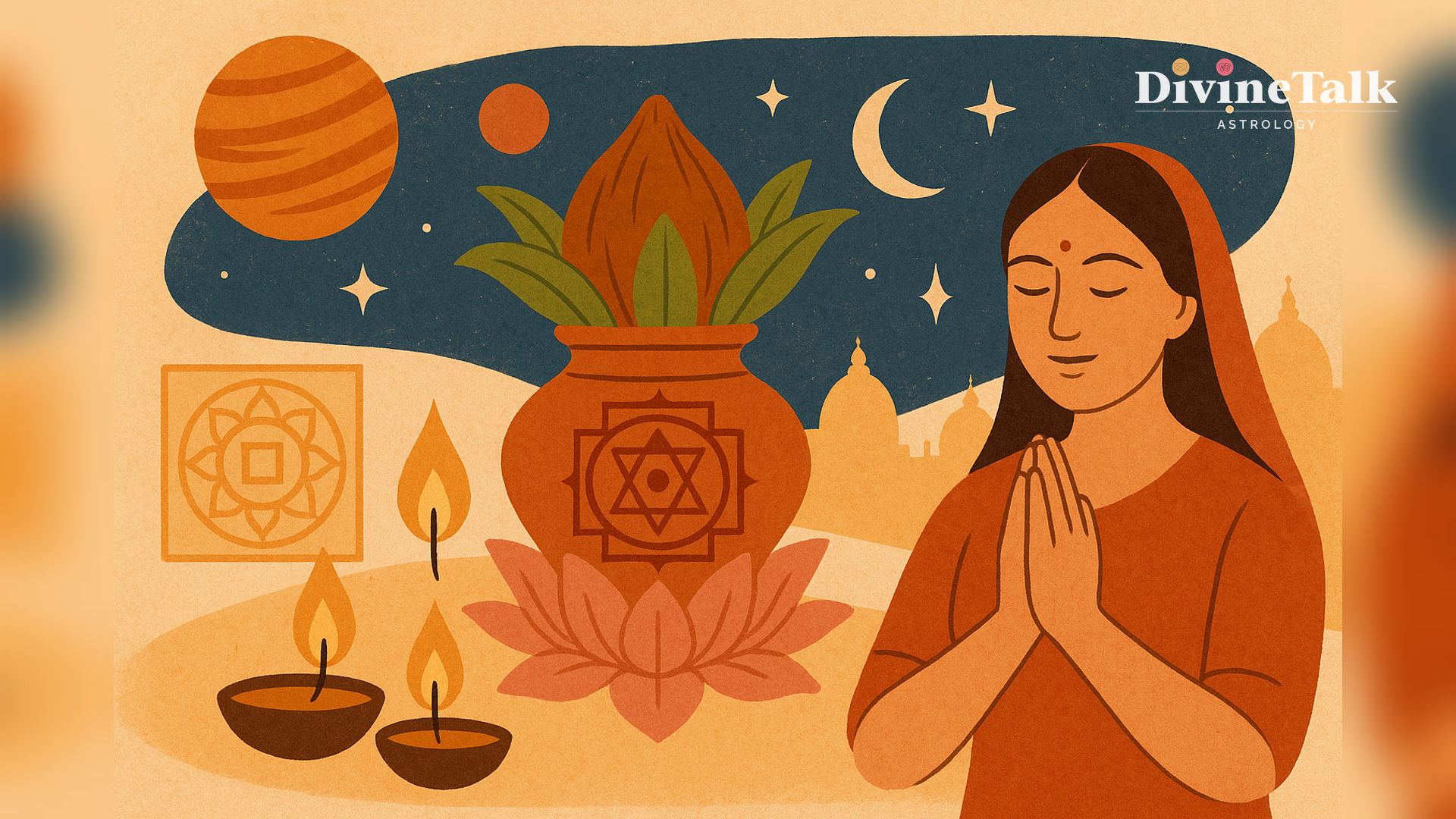
Shardiya Navratri 2026, the autumn nine-night festival of the Goddess, begins on 11 October 2026 with Ghatasthapana, the ritual setting up of a sacred kalash or pot, and closes with Vijayadashami or Dussehra on 20 October 2026. Between these two dates sit nine nights of fasting, prayer, and celebration of the nine forms of Durga, each with its own colour, story, and meaning. If you have ever wondered why some households start their puja at sunrise while neighbours wait till noon, the answer lies in a small window of time called the Ghatasthapana Muhurat, and getting it right matters more to most families than almost any other detail of the festival.When is Navratri 2026?Shardiya Navratri 2026, the main nine-day Navratri of the year, runs from 11 October to 20 October 2026, according to the Hindu lunar calendar followed across most of India. This period covers the nine days of Navratri dedicated to the Goddess, ending with Vijayadashami. There is also a smaller, less widely observed Chaitra Navratri in spring, usually in March or April, which follows the same nine-day pattern but marks the start of the Hindu new year rather than the approach of autumn.The Chaitra Navratri 2026 Ghatasthapana Muhurat falls earlier in the year, around late March, and is celebrated with equal devotion in North Indian households, though it draws less public attention than its autumn counterpart. Both Navratris share the same ritual structure: nine nights, nine goddess forms, and a kalash sthapana to begin proceedings. This guide focuses on Shardiya Navratri 2026, since it is the festival most Indians mean when they simply say Navratri.What is Ghatasthapana and why does the muhurat matter?Ghatasthapana, also called Kalash Sthapana, is the ritual installation of a sacred pot representing the Goddess and the beginning of the universe, performed on the first day of Navratri. It is traditionally performed during the prescribed muhurat, an astrologically favourable time window, as this is considered the correct way to begin the nine-day observance.Ghatasthapana falls on Sunday, 11 October 2026. For New Delhi, the Ghatasthapana Muhurat is 6:19 AM to 10:12 AM, with the Abhijit Muhurat available as a second window from 11:44 AM to 12:31 PM. The Pratipada Tithi runs from 9:19 PM on 10 October to 9:30 PM on 11 October 2026. These timings are specific to New Delhi; the DivineTalk app carries a city-wise muhurat calculator if you need timings for another location.Families who miss the morning window need not worry unnecessarily. For New Delhi, the Abhijit Muhurat runs from 11:44 AM to 12:31 PM and offers a dependable backup slot for Kalash Sthapana on 11 October 2026 if the earlier window does not suit your household's schedule. To stay updated on muhurats related to other festivals or even if you are interested in Vedic astrology, the DivineTalk app is a must-try for you.What happens on each of the nine days of Navratri?Each of the nine days of Navratri is dedicated to one form of the Goddess, known collectively as Navadurga, the nine forms of Durga. Devotees worship a different form daily, often wearing a colour associated with that day, and the sequence moves from Shailaputri on day one to Siddhidatri on day nine, tracing a symbolic journey of the Goddess's power and grace.Day 1 (11 Oct): Shailputri, daughter of the mountains; Ghatasthapana performed; colour is traditionally yellow or grey depending on regional customDay 2 (12 Oct): Brahmacharini, the ascetic form representing penanceDay 3 (13 Oct): Chandraghanta, the warrior form with a crescent moonDay 4 (14 Oct): Kushmanda, believed to have created the universe with her smileDay 5 (15 Oct): Skandamata, mother of Skanda, worshipped for maternal strengthDay 6 (16 Oct): Katyayani, associated with courage and shaktiDay 7 (17 Oct): Kalaratri, the fierce protector against darknessDay 8 (18 Oct): Mahagauri, marked by Durga Ashtami 2026 and Kanya Puja in many homesDay 9 (19 Oct): Siddhidatri, worshipped on Maha Navami 2026, the day of fulfilmentDay 10 (20 Oct): Vijayadashami, also called Dussehra, marking the Goddess's victoryThe exact dates for each tithi, or lunar day, can shift by a day depending on the panchang followed in your region, so it is worth cross-checking locally rather than assuming these dates apply uniformly across India. This variation is normal and does not affect the spiritual significance of the observance.When are Durga Ashtami, Maha Navami, and Vijayadashami in 2026?Durga Ashtami 2026 falls on 18 October, Maha Navami 2026 falls on 19 October, and Vijayadashami Dussehra 2026 falls on 20 October. These three days form the emotional peak of Navratri, moving from Ashtami's Kanya Puja, where young girls are worshipped as living forms of the Goddess, through Navami's closing rituals, to Dussehra's celebration of good triumphing over evil.Many households perform Kanya Puja on either Ashtami or Navami, inviting young girls home, washing their feet, and offering them food and small gifts as a mark of respect. This custom varies by family and region, with some communities observing it on both days and others choosing just one, so there is no single correct approach, only local tradition.For a detailed breakdown of Vijayadashami timings, Ravan Dahan customs, and the puja vidhi specific to that day, see our dedicated guide on Dussehra 2026: Date, Vijayadashami Muhurat, Puja Vidhi & Ravan Dahan Timings. It walks through the effigy-burning tradition and the muhurat for that final evening in far more depth than we can cover here.How do you perform Navratri puja at home?Navratri puja vidhi, the step-by-step ritual procedure, begins with Ghatasthapana on day one and continues with daily aarti, offerings, and fasting through day nine. Most households keep an akhand jyot, an unbroken lamp, burning throughout, alongside daily readings from the Durga Saptashati or Devi Mahatmya, texts describing the Goddess's victories, though families that cannot read the full text often recite simpler mantras instead.A basic daily routine looks like this: clean the puja space, light the akhand jyot or diya, offer flowers and naivedya, recite the relevant mantra or chapter for the day, and conclude with aarti in the morning and evening. Exact practices vary by family, region, and tradition.What goes into the Navratri puja samagri list?The Navratri puja samagri list, meaning the collection of ritual items needed, typically includes a clay pot, mango leaves, a coconut, red cloth, durva grass, roli or kumkum, akshat (unbroken rice), a small oil lamp, incense, flowers, and seeds sown in a tray of soil for the jowar or barley sprouts tradition. The exact samagri can vary by family, region, and tradition.Clay kalash (pot) and a lid, or a matkaMango leaves to place around the pot's neckA coconut, often wrapped in red clothBarley or wheat seeds and a small tray of soilRoli, kumkum, akshat, and a moli (sacred thread)Flowers, incense sticks, and a diya with ghee or oilA picture or idol of Durga Devi and the Navadurga formsFruits and sweets for daily offerings (bhog)Keeping this list ready a day or two before Ghatasthapana avoids last-minute scrambling, especially in cities where puja shops get crowded close to the muhurat window.What are the vrat rules during Navratri?Navratri vrat, or fasting, practices vary widely by individual, family, region, and tradition. Commonly followed practices include avoiding grains, onion, garlic, and alcohol, while commonly consumed fasting foods include fruits, dairy, and specific flours like kuttu (buckwheat) or singhara (water chestnut), though none of these are mandatory. Some devotees fast for all nine days, others only on the first and last days, and some skip fasting altogether while still observing the puja.There is no single mandatory way to fast, and DivineTalk does not recommend any specific dietary restriction as compulsory, since health needs differ from person to person. If you have a medical condition, it is sensible to consult a doctor before undertaking a multi-day fast, and to treat vrat as a personal spiritual practice rather than an obligation with a fixed outcome.Why do the nine colours of Navratri matter?Navratri 2026 colours for the nine days follow a sequence believed to reflect the mood and energy of each goddess form, with devotees often wearing the day's colour to temple visits, garba, and family gatherings. Colour associations can vary by region, community, and tradition, and while the exact colour list varies by regional almanac and publication, the practice of colour-coding each day has become a widely shared part of modern Navratri celebration, especially in Gujarat's garba and dandiya circuits.This colour tradition is a relatively recent popular addition rather than an ancient scriptural rule, so treat it as a fun, community-building custom rather than a strict requirement. Many people simply enjoy checking the daily colour before choosing an outfit for evening garba.Quick comparison: Navratri 2026 at a glanceFestival: Shardiya Navratri 2026 (autumn, main observance)Start date: 11 October 2026 (Ghatasthapana)End date: 20 October 2026 (Vijayadashami / Dussehra)Durga Ashtami 2026: 18 OctoberMaha Navami 2026: 19 OctoberChaitra Navratri 2026: separate spring observance, around March–AprilPuja frequency: daily aarti and mantra recitation across all nine daysFasting: optional, varies by family and regionTerms to know before Navratri 2026Ghatasthapana / Kalash Sthapana: ritual installation of a sacred pot on day oneMuhurat: an astrologically favourable time window for a ritualNavadurga: the nine forms of Goddess Durga worshipped across the nine daysAkhand Jyot: an unbroken lamp kept lit throughout the festivalKanya Puja: ritual worship of young girls as forms of the GoddessVrat: a fast or vow of restraint observed during the festivalPanchang: the traditional Hindu almanac used to calculate tithis and muhuratsTithi: a lunar day in the Hindu calendarIf your family also observes Pitru Paksha before Navratri begins, our guide to Pitru Paksha 2026: Complete Dates, Tithi Calendar & Shradh Timings lays out the fortnight of ancestor remembrance that traditionally precedes the Goddess's arrival, and our piece on Sarva Pitru Amavasya 2026: Date, Tithi, Shradh Muhurat & Puja Vidhi covers the closing day of that period in detail.Key takeawaysShardiya Navratri 2026 runs from 11 October to 20 October, with Ghatasthapana on the first morning and Vijayadashami on the last day.Durga Ashtami falls on 18 October and Maha Navami on 19 October 2026, both central to Kanya Puja customs.Ghatasthapana Muhurat and Abhijit Muhurat timings vary by city, so check a local panchang or the DivineTalk app before starting your puja. FAQs related to Navratri 2026What is the Ghatasthapana Muhurat for Navratri 2026?The Ghatasthapana Muhurat for Navratri 2026 falls on 11 October 2026. For New Delhi, the muhurat runs from 6:19 AM to 10:12 AM, with the Abhijit Muhurat available as a backup window from 11:44 AM to 12:31 PM. Exact minute-level timings vary by city, so check a location-specific panchang before beginning the ritual. How many days is Navratri 2026?Shardiya Navratri 2026 spans nine days and nights, from Ghatasthapana on 11 October to Maha Navami on 19 October, followed immediately by Vijayadashami on 20 October, which marks the festival's conclusion. What is the difference between Chaitra Navratri and Shardiya Navratri?Chaitra Navratri falls in spring, around March or April, and marks the Hindu new year, while Shardiya Navratri falls in autumn and is the more widely celebrated of the two. Both follow the same nine-day, nine-goddess structure but differ in season and regional prominence. Is fasting compulsory during Navratri?No, fasting during Navratri is a personal practice, not a compulsory rule. Some devotees fast all nine days, others fast selectively, and many observe the puja without fasting at all. Anyone with health concerns should consult a doctor before undertaking an extended fast. When is Vijayadashami or Dussehra in 2026?Vijayadashami, also called Dussehra, falls on 20 October 2026, marking the end of Navratri and the Goddess's victory over evil. It is also celebrated separately with Ravan Dahan traditions in North India. Get your personalised Navratri 2026 guidance